Tap: jump
A bare tap hops about three and a half cells. Anywhere on the screen, with any thumb.
The runner of the Banana Madness universe
Tap. Jump. Read the wind.
The game you play on the bus. Portrait, one thumb, no menus in the way: an ape sprints across the same destructible skylines the artillery war is fought over, and you tap to jump. Hold for a bigger jump. That is the entire control scheme.
Dead simple on purpose. Every bit of depth comes from the world, never from more buttons.
A bare tap hops about three and a half cells. Anywhere on the screen, with any thumb.
Keep the finger down and the jump stretches to six and a half cells. It caps at a quarter of a second, so there is nothing to gain from mashing.
No swipes, no dash, no second button. Power-ups trigger when you run into them. Coyote time and an input buffer make every tap feel fair.
On a rooftop you run at exactly your speed. The moment your feet leave it, the same wind that bends every banana in Banana Madness pushes you too. A tailwind stretches a jump by a cell or three; a headwind shortens it by the same. It changes every few seconds, always announced two seconds ahead — the gauge pulses, the rain leans, a gust whooshes. Every jump is a read of the gauge.
Somewhere behind the camera two apes are having the match you played in Banana Madness — and their bananas land on your rooftops. A whistle, a blinking target ring, a banana arcing in from the top of the screen, and a crater blown exactly where you were about to land. Debris tumbles off the building. You jump the new gap instead. Inside the ring when it hits zero is a direct hit. Outside it, and airborne, the shockwave just shoves you.
Distance is the score and the clock. Every run starts in Downtown and travels the five worlds in order — then Madness loops them all at full intensity.
Reached a world once? Start there next time for a handful of bananas — you still have to survive it.
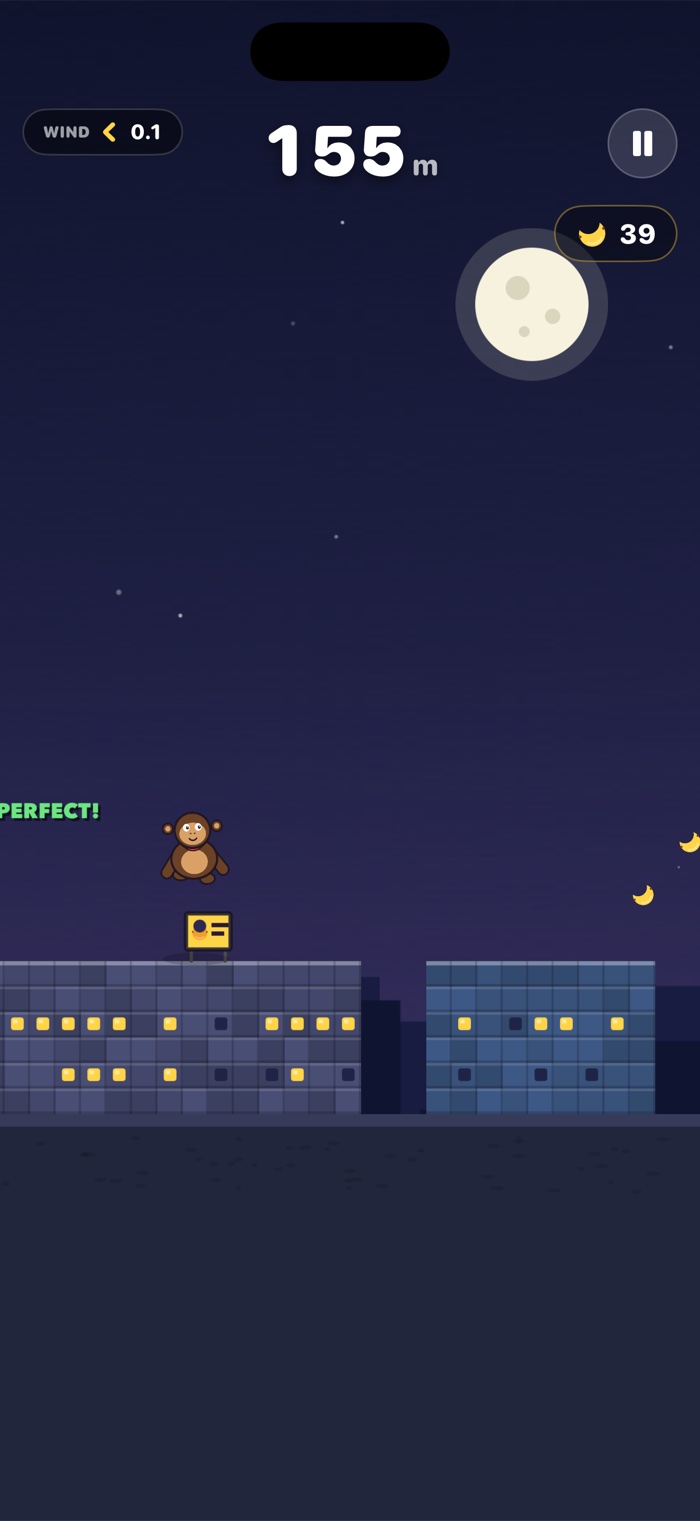
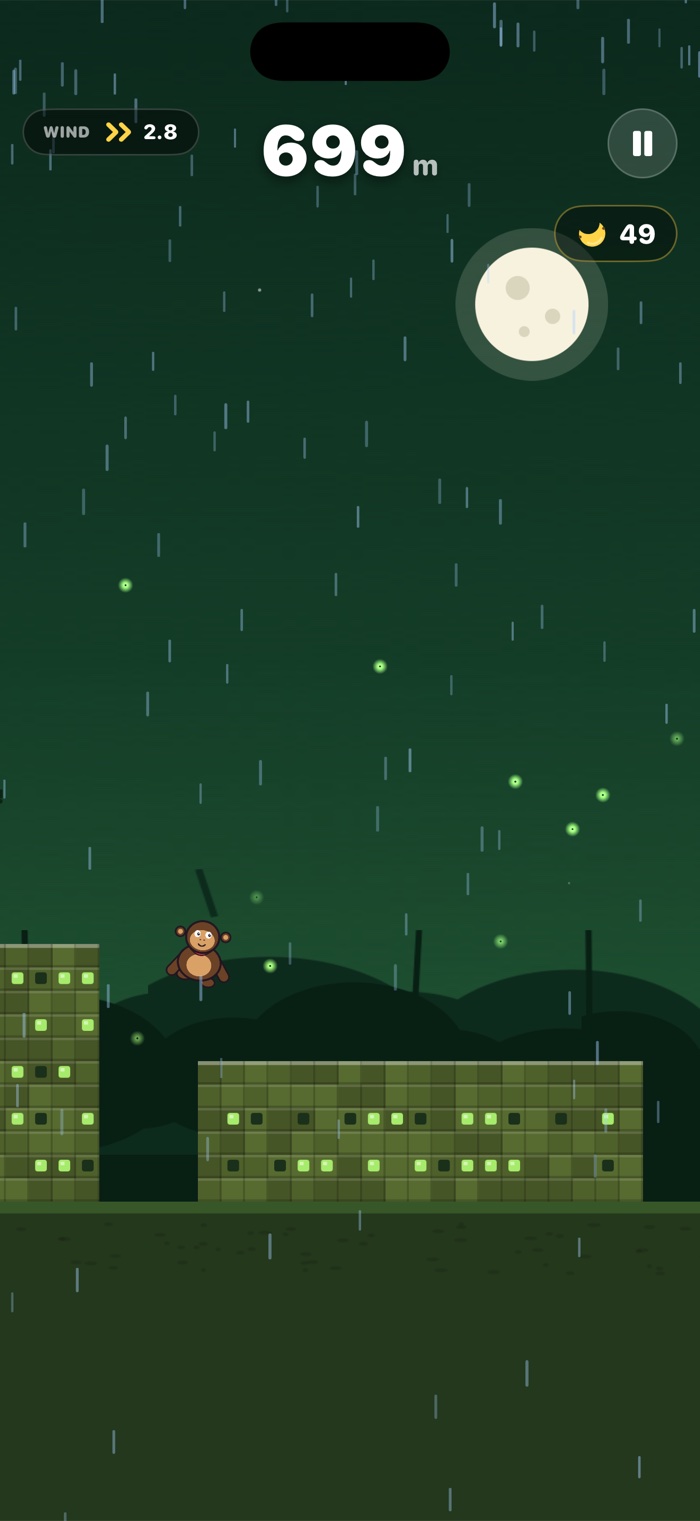
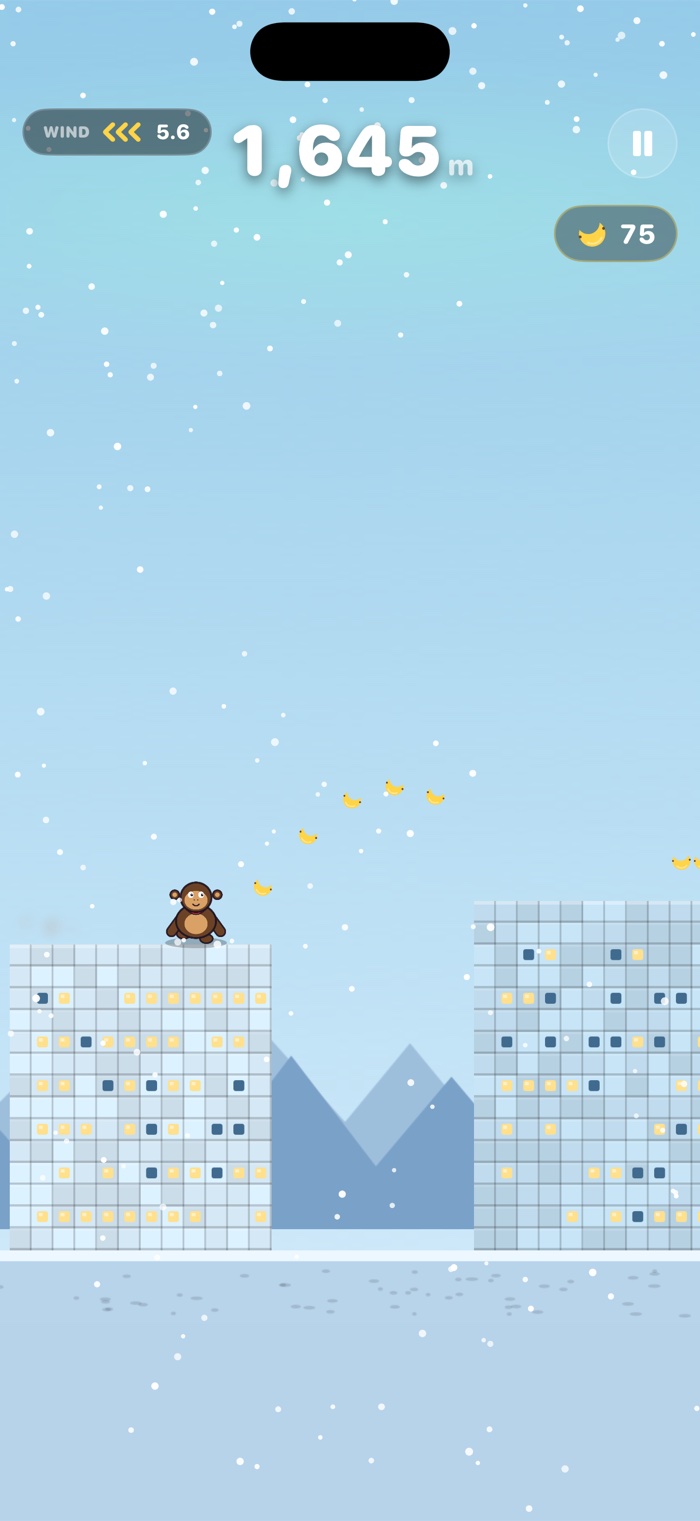
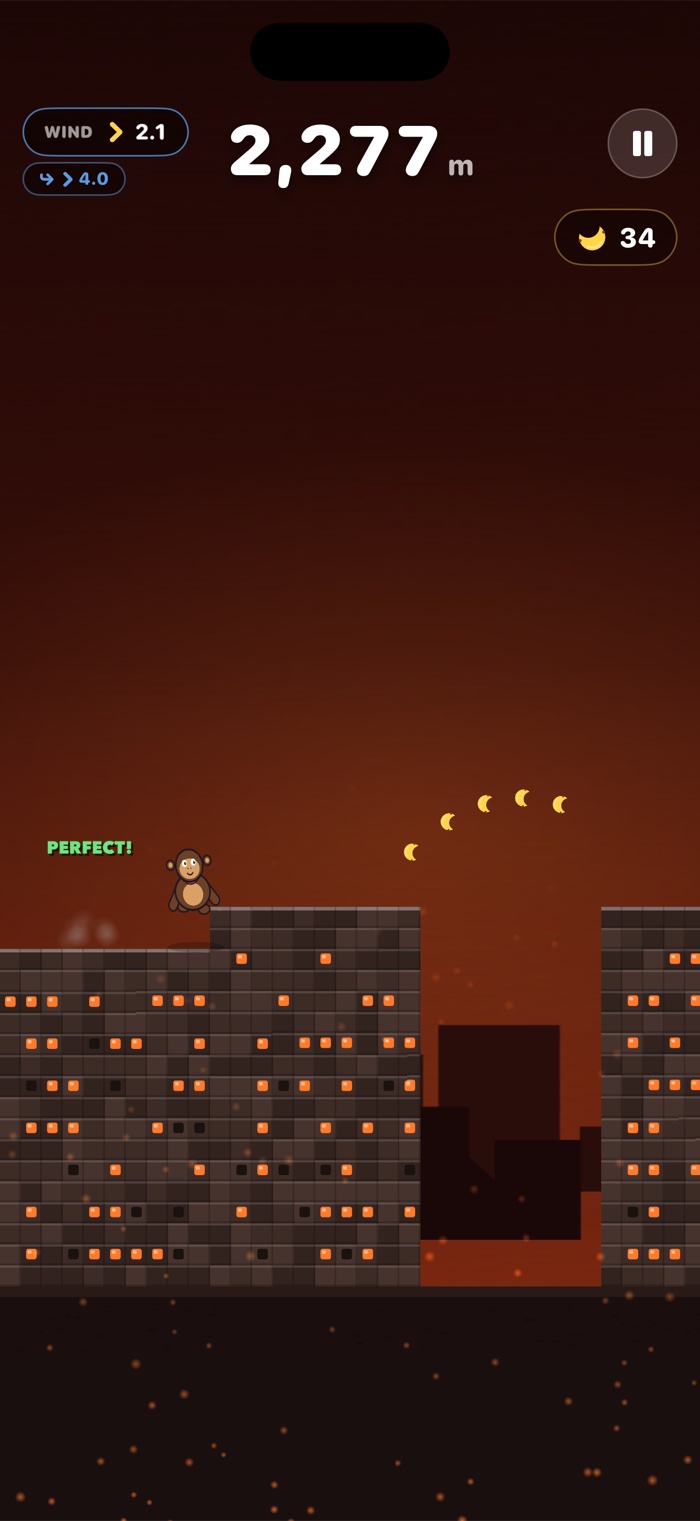
Every passive from the artillery game, translated to running. Four are unlocked by reaching a world for the first time, four with bananas, one comes with you from day one.
Classic bananas are the currency — you collect them. The special ones are power-ups that trigger on touch. Same sprites you know from the artillery game, new tricks.
Bananas curve toward you from three cells away. 8 s.
You become a rolling banana bomb: furniture shatters, hazards can't hurt you, bonks don't exist. 6 s.
Every banana is worth three, and the coin pitch ladder climbs. 8 s.
The world slows to half speed while your jump stays full. Time to read the wind. 5 s.
Carried, not timed. Fall, tap within three seconds, and you're back on the next roof. One per run — never in the Daily Run.
Bananas rain along your path for the next 300 m.
Every banana you grab spawns two more just ahead, so chains bloom. 6 s.
"Reach the Jungle." "Clear 15 gaps with a tailwind." "Land 5 close calls in one run." Complete all three, climb a tier, get three more. Progress ticks on every result card.
One layout for everyone, every day, seeded from the calendar. Unlimited attempts, a daily leaderboard — and a translucent ghost of your own best attempt to race.
Death, kill-cam, result card, RUN AGAIN under your thumb. Or tap anywhere. No confirmation, no countdown, no waiting.
Same skylines, other game
Banana Madness is the artillery duel those craters come from: a 50-level campaign, quick matches against an AI that really aims, and pass-and-play couch duels.
Not a banner, not a video, not a "watch this to continue."
Run as long as you want. It's your phone, and your bus ride.
Every ape and every power-up can be earned by playing. Second Wind is only ever bought with bananas, never money — nobody buys leaderboard distance.
No accounts, no servers, no analytics. Your best distance and your ghost live on your phone. Game Center is optional and handled by Apple.